
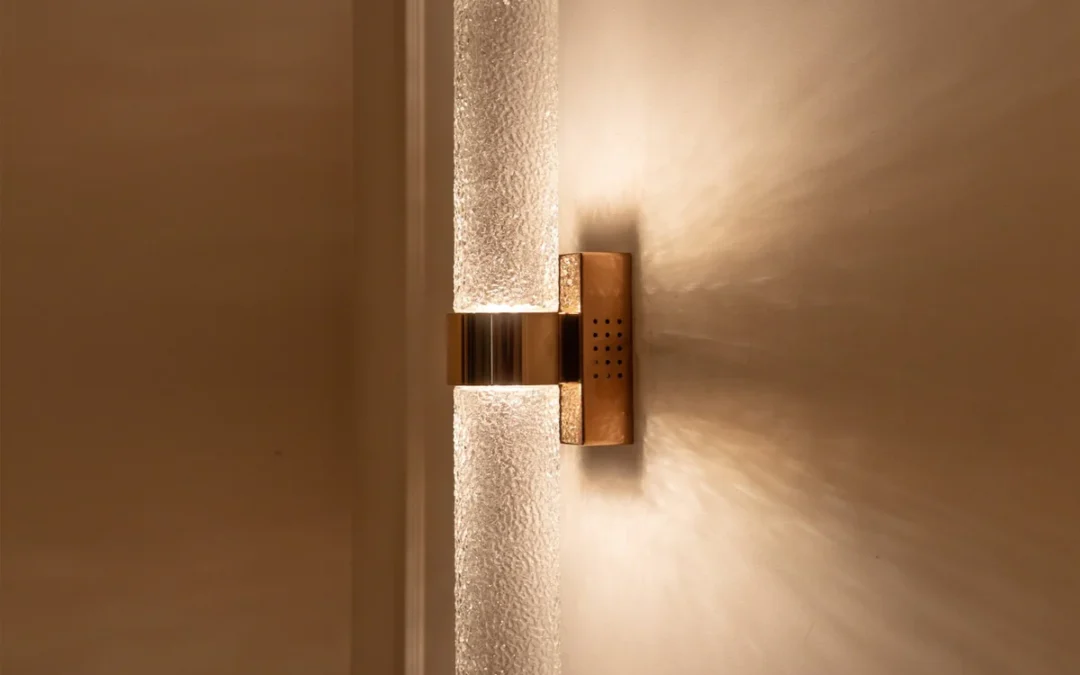
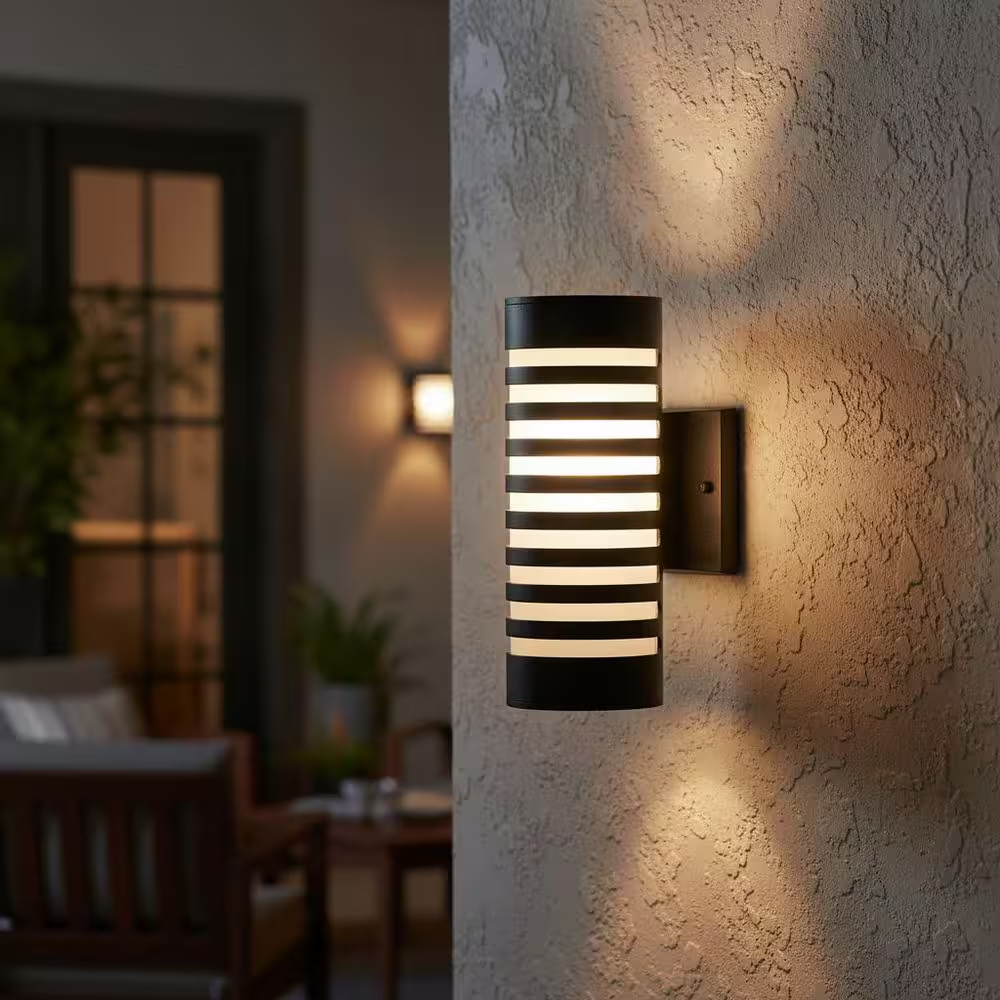
Wall sconces lights are the unsung heroes of interior design. They are far more than simple secondary light sources. They act as essential tools for architects, offering subtle light and defining wall spaces. For contemporary US homes, incorporating designer sconces lights is crucial. They are key to achieving sophisticated, layered lighting and adding valuable texture.
These specialized fixtures contribute valuable texture and visual interest to a space. Furthermore, they solve common lighting problems elegantly. They eliminate dark corners while drawing attention to specific architectural features. Consequently, the right wall sconce can transform a flat surface into a dynamic element of the room. This makes them indispensable in creating a truly curated and luxurious environment.
I. The Strategic Role of Sconces Lights in Layering
True architectural design relies on combining three types of light: ambient, task, and accent. Sconces lights excel as both accent and task sources
A. Creating Accent Drama
Sconces are unmatched at highlighting vertical surfaces. For instance, fixtures with up-down light distribution graze the wall surface. This technique emphasizes the texture of the wall material. Consequently, if you have stone, exposed brick, or custom paneling, the sconce light dramatically enhances it. This adds significant architectural depth.
B. Functional Task Lighting
Sconces lights are highly effective as task lighting. They eliminate clutter. However, placement is vital for function.
-
Bedside Use: Swing-arm or slim vertical sconces replace traditional table lamps. Thus, they free up nightstand surface area.
-
Vanity Lighting: Sconces placed vertically beside a bathroom mirror offer cross-illumination. This provides the most flattering, shadow-free light for grooming.

2. Mastering Placement and Scale for Visual Flow
The effectiveness of a wall sconce is entirely dependent on its relationship with the surrounding space.
| Placement Detail | Standard Guideline | Architectural Purpose |
| General Height | 60–66 inches from the finished floor (eye level). | This ensures the bulb is not directly visible. Moreover, it prevents unwanted glare. |
| Spacing in Corridors | Place sconces at equal intervals, usually 8–10 feet apart. | In addition, this rhythmic spacing guides movement. It emphasizes the length and symmetry of the hallway. |
| Distance from Art | Sconces should be centered to the piece or placed to frame it. | They draw the eye towards the artwork. Therefore, the light becomes part of the display. |
Important Note: Ensure the scale of the sconces lights is appropriate for the wall. A tall, slender sconce suits a narrow column. Conversely, a broader design works on an expansive wall.
3. Materiality and Durability for High-End Use
A designer sconce distinguishes itself through quality. Look for high-grade materials and superior build.
-
Integrated LEDs: The cleanest modern sconces feature integrated LED light sources. This allows for extremely thin and geometric designs. However, ensure the LED has a minimum CRI of 90.
-
Durable Finishes: Finishes must be resilient. Especially for bathroom or exterior applications, look for IP-rated fixtures. Materials like marine-grade stainless steel or powder-coated aluminum resist corrosion.
-
Light Quality: High-quality diffusion materials are crucial. Frosted glass or polymer lenses spread the light evenly. This prevents harsh spots or sharp cut-offs.
By strategically incorporating designer sconces lights, you can subtly sculpt light and shadow across your walls. This elevates the space from simply decorated to truly architecturally designed.